Series Production
In contrast to individual part production or prototyping, we refer to series production when dealing with larger quantities of identical components.
Zur Einordnung
Our Series Production in General – Distinction from Conventional Series Production
Whenever a large number of identical components are to be manufactured, we speak of series production. In additive manufacturing, there are only minor synergy effects as the quantity increases. This effect can be compared to machined series production. Once the machining program has been created and the milling or turning machine is set up, the machine hourly rate, the production time, and the material used determine the unit costs.
It is different with plastic injection molding or light metal die casting: here, relatively expensive molds must first be created. From this point on, the part price decreases as the quantity increases. This state continues until either the mold is “worn out” and must be replaced with a new one, or—as is often the case—when the geometry of the component needs to be changed. This might happen because the requirements for the component have increased or because the component is intended to fulfill other functions in the future.
This also requires a new mold or at least a modification of the existing mold, and the amortization of the mold costs starts all over again.
Series-Produced Components
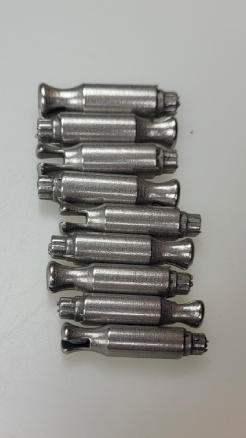
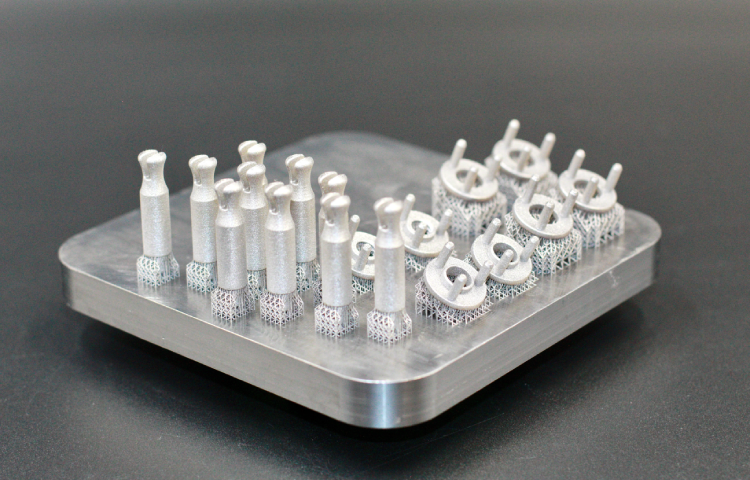
String retainer bolts
Additively manufactured using the LPBF process
Material: Stainless steel 17-4PH (1.4542)
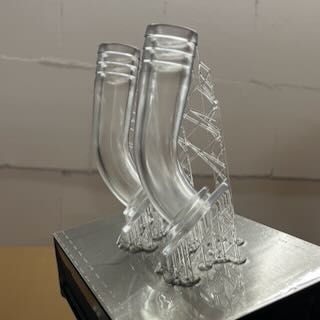
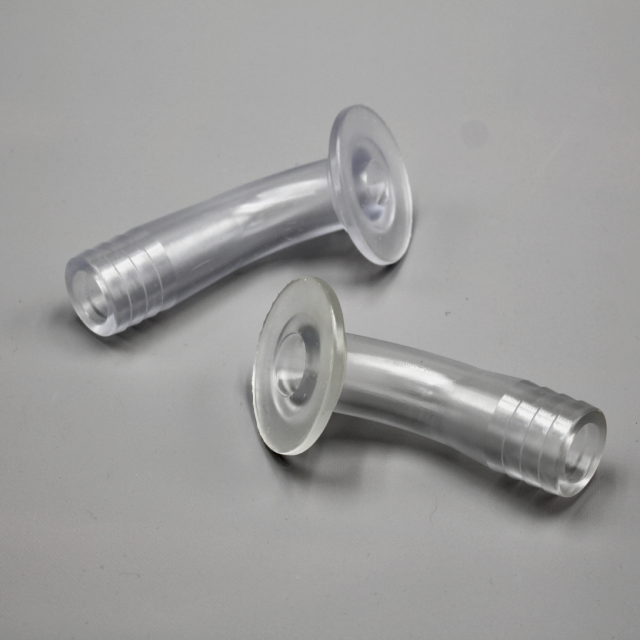
Pipe socket
Additively manufactured using the MSLA process
Material: Formlabs Resin Clear V5
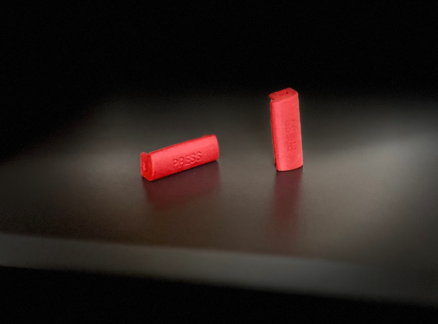
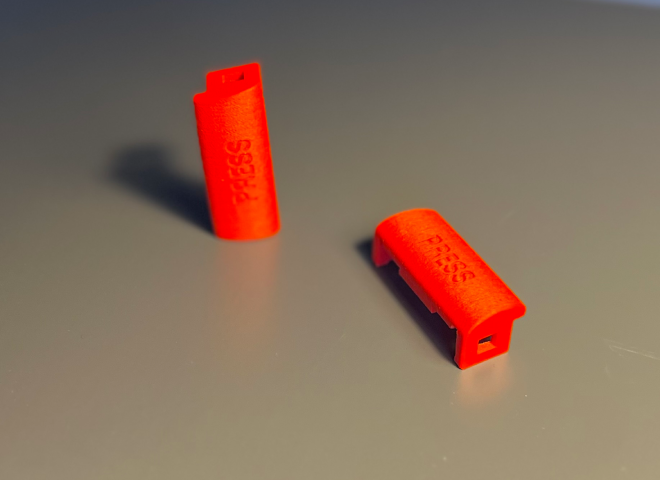
Push button for belt buckle
(Passenger car seat belt)
Additively manufactured using the FDM process
Material: ABS GF
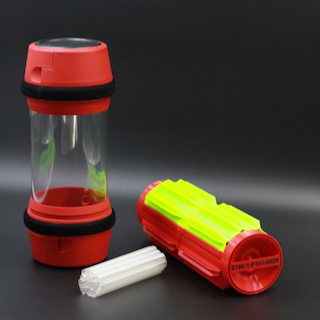
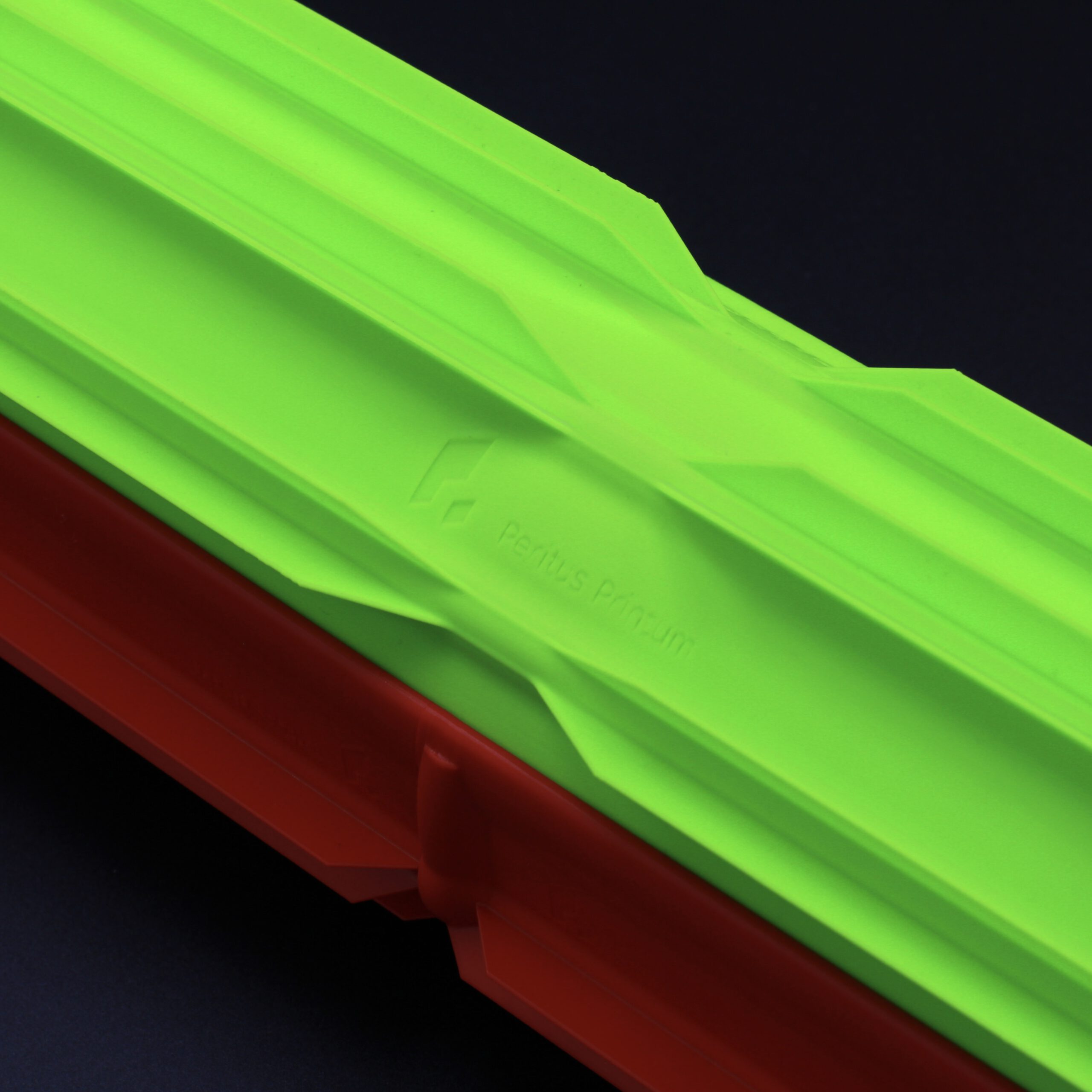
MediProtektor®
In-house development by Peritus Printum
Material: TPU
SERIENFERTIGUNG
String retainer bolts
Design for Additive Manufacturing (DfAM) and
production of string retainer bolts for electric bass guitars
Additive manufacturing via LPBF
Material: Stainless steel 17-4-ph
Objectives
serienfertigung
Pipe socket
The pipe socket replaces a standard injection-molded component. Due to the manufacturing process chosen for the original part, significant disruptions in flow behavior had to be accepted.
Material: Formlabs Resin Clear V5
Objectives
SERIES PRODUCTION
Push button for a passenger car seat belt buckle
Design / reverse engineering based on the original injection-molded part
Additive manufacturing via filament printer (FDM)
Material: ABS GF
Objectives
Eigenenticklung
MediProtektor® Family
Customized inlays for pneumatic tube carriers – usable as a variant for medication transport in pharmacies, for blood samples, or for all types of patient specimens
Material: TPU
Objectives
Take your product to a new level with us!
We deliver your series components quickly and with dimensional accuracy – fast, flexible, and of the highest quality.

