
Post-Processing
Sometimes we “print” a component and it is finished.
However, post-processing often provides the proverbial “final touch”—functional surfaces are optimized, surfaces are refined, and colors are matched to the corporate identity … just like in conventional manufacturing.
Vorab eine Begriffsklärung
Post-processing is a vital building block for success
Color, surface, fit, appearance, haptics, properties … these keywords immediately come to mind when we talk about post-processing. These steps are often what first establish flawless usability or a compelling design language.
With 20% of the effort, 80% of the effect or function is achieved. But that is only 80%.
We know this ratio from various areas of life—the famous 80/20 rule applies here as well. The effort required for the final 20% is often underestimated—but it is always tangible!
Applications and possibilities for component post-processing
Depending on the component and requirements, post-processing accounts for a significant portion of the entire product development process.
See our most common and important post-processing skills here.
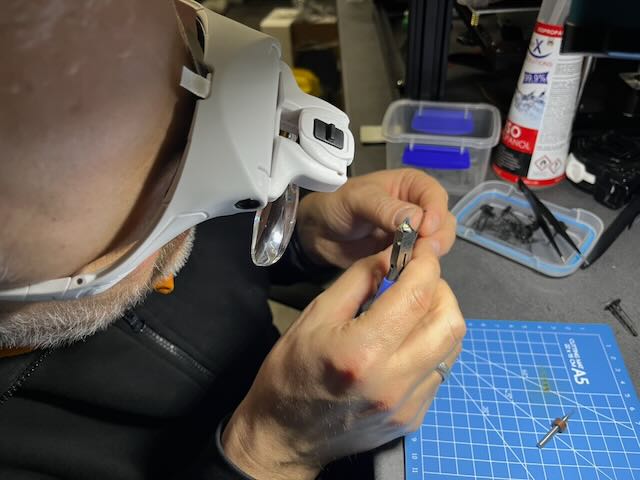
Removing support structures—the classic
This is sometimes truly delicate work. A magnifying glass and a steady hand are indispensable here.
Or sturdy tools and a robust approach—depending on the material and component.
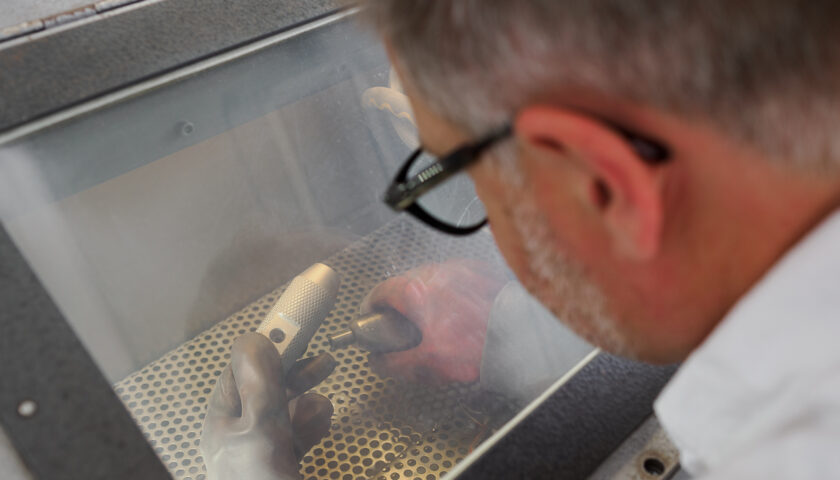
Glass bead blasting surfaces
Roughness is removed and the surface appearance is refined—while maintaining a reliable tactile feel.
This is often the first choice, especially for stainless steel components.
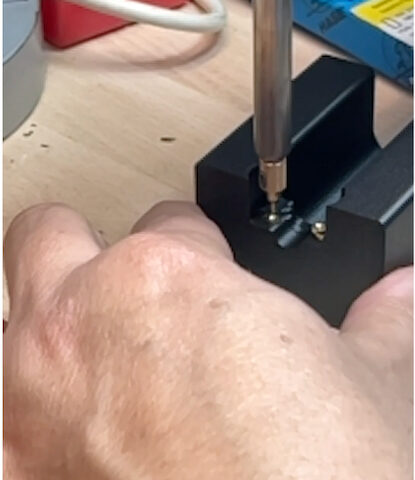
Melting, reaming, drilling, threading
Fits or screw connections are also frequently required for additively manufactured components. We bring fits to the precise final dimension by reaming boreholes.
We can either print threads directly, cut them manually, or melt them in using high-quality (brass) threaded inserts—we choose the appropriate solution depending on the application.
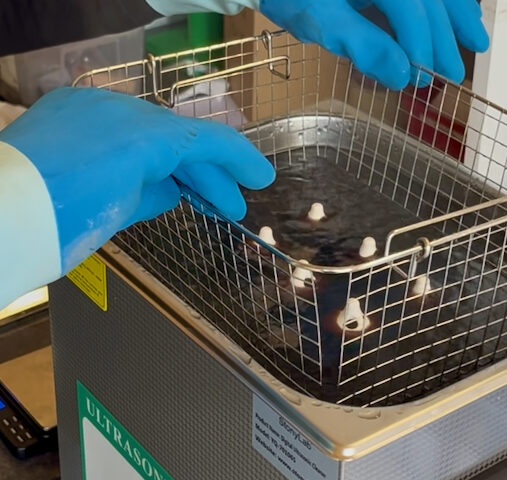
Coloring plastic components
Some materials used in additive manufacturing can be post-processed exceptionally well by us using a dye penetration process. Polyamides are particularly suitable for this.
This coloring technique has another significant benefit, especially for nylon… Please feel free to contact us about this.
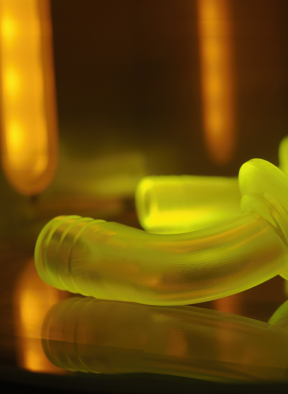
Annealing
Some high-strength plastics can be post-processed through a final annealing process.
Through defined exposure to temperature, the components are brought to their maximum achievable level of mechanical strength.
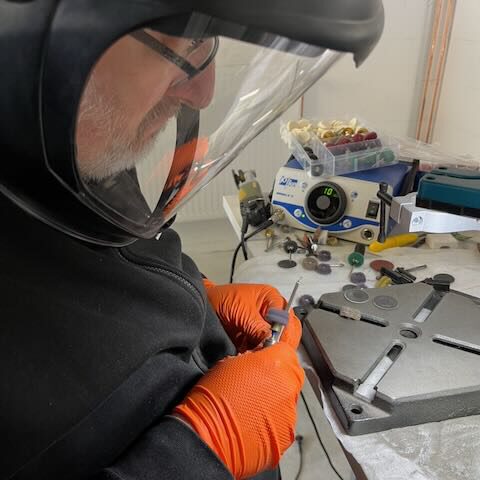
Manual Sanding/Polishing
In the manual sanding process, we can provide a wide range of treatments—starting from deburring (e.g., to ensure flawless mechanical function/movement) to individual high-gloss polishing of representative (metal) components.
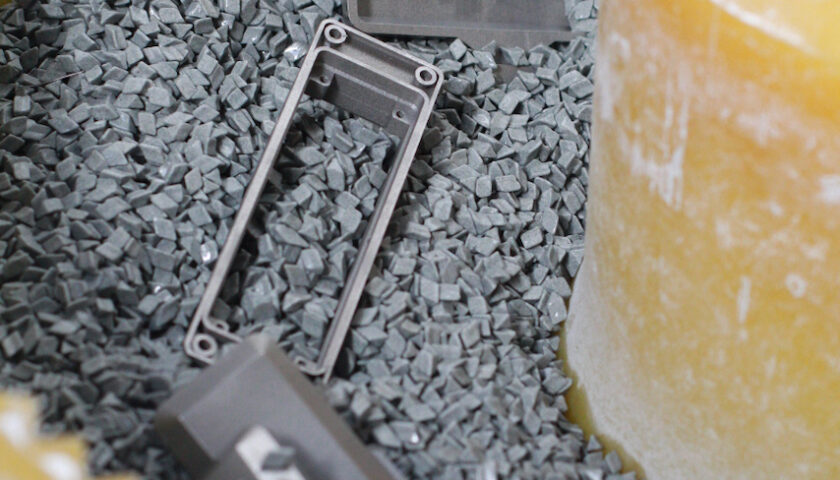
Deburring/Smoothing
In the automated vibratory finishing process, we can achieve a wide range of surface finishes—starting from deburring with abrasive media to significant smoothing of contours and surfaces.
In addition to the material being processed, the result depends on the selected abrasive media and the processing time.
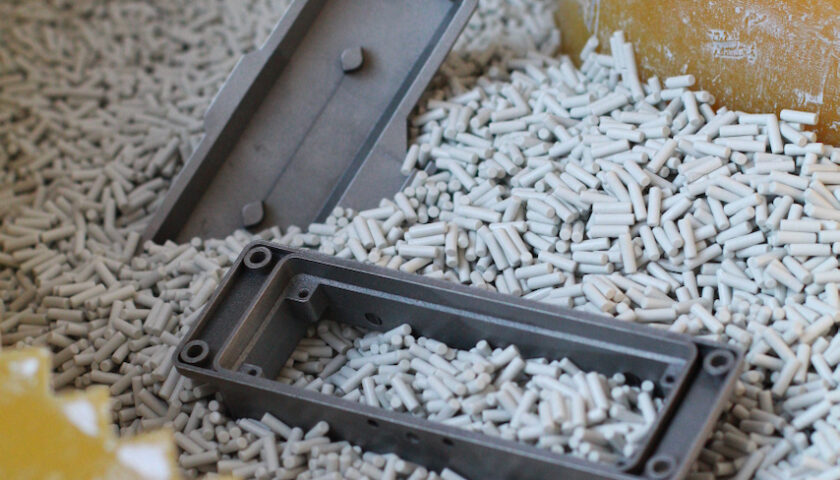
Polishing/Burnishing
In the final automated vibratory finishing process, we can burnish surfaces to a gloss or high-gloss finish using ceramic media (non-abrasive).
This final process step smooths the surface significantly once more and can—depending on the material and processing time—produce a high-gloss surface.
We take your component to a new level!
Our craftsmanship, expertise, and technical capabilities determine the achievable results—our services can be seen and felt.