
Design Engineering
Design requires process understanding – then as now.
We combine classic manufacturing expertise with the possibilities of additive manufacturing.
What Does Design Mean?
An unassuming word with far-reaching implications.
In the daily professional life of a manufacturing specialist, everyone has experienced more than once that not every design “works.” Tolerances, for example, are an invitation to failure. The question of manufacturability is also not always clearly answered.
Design Then and Now
In the past, the design process was characterized by an inherent knowledge of machining, and the requirements of injection molds, sliders, cores, among others. Today, the same holds true. No one would think of designing a curved channel within a solid metal component.
Perhaps – and this is already a higher art – two bores in a metal cuboid meet at a single point. But a curved channel? Not possible.
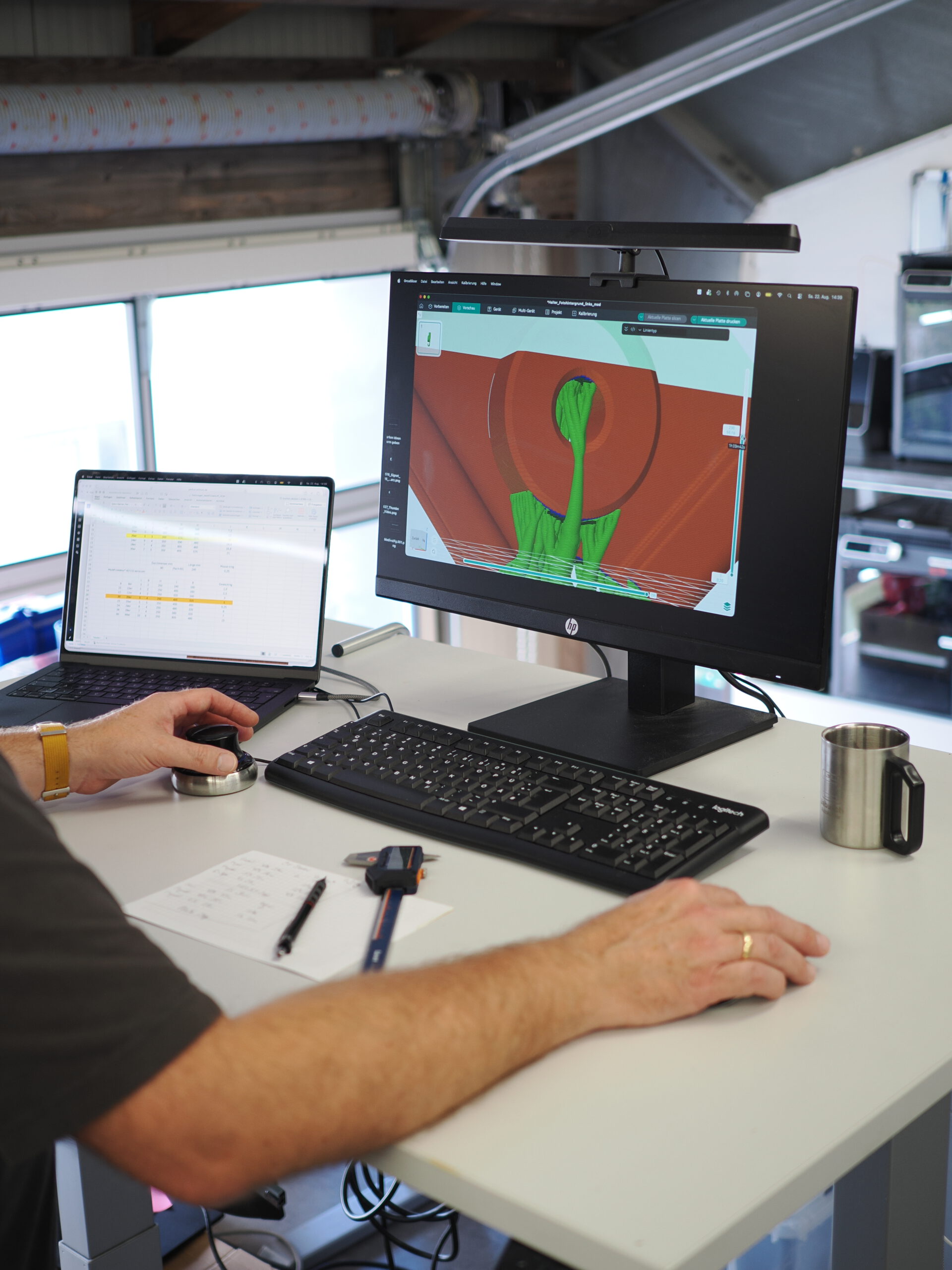
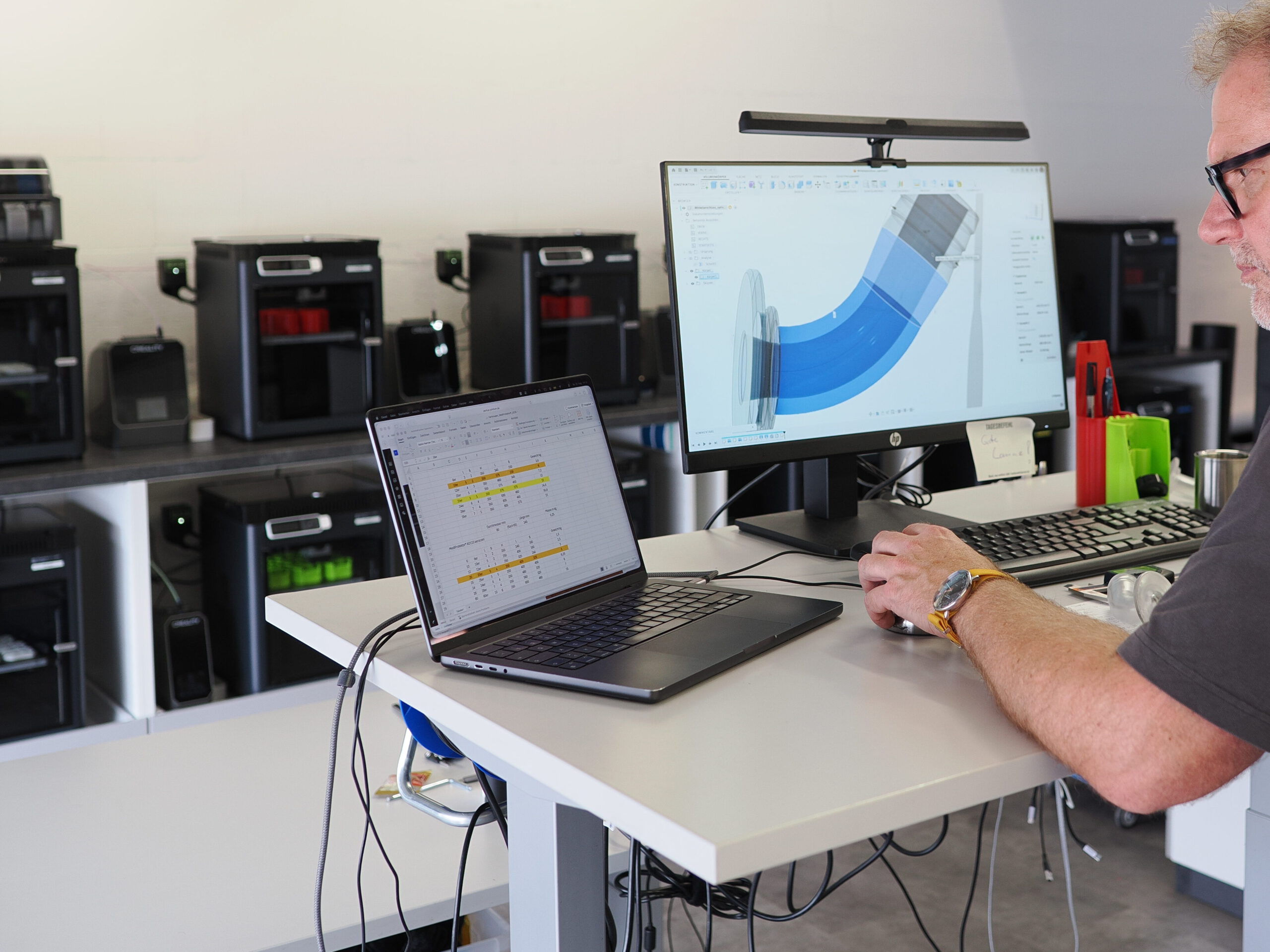

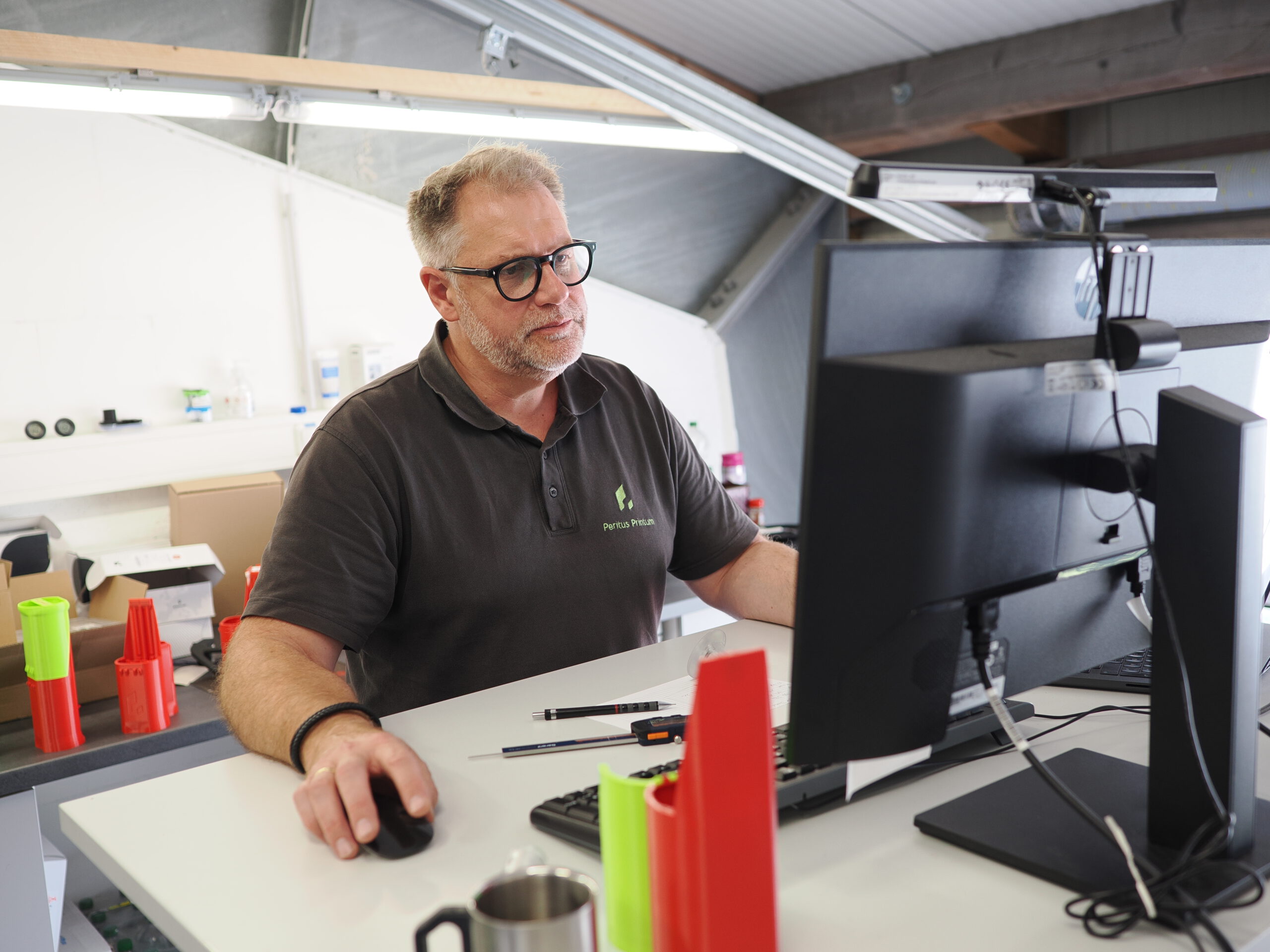
Now to the other “today”…
…the possibilities of additive manufacturing.
If a curved channel is needed in a solid metal component, then that’s how it’s designed. LPBF-manufactured metal components allow for this.
HOWEVER, even here, one must know what needs to be considered: what is technically feasible in manufacturing, when support structures are needed, how supports can be removed, etc.
Conclusion
Just as designers in the past always needed a fundamental understanding of the subsequent manufacturing process, this is equally true today with regard to additive manufacturing.
The core principles haven’t changed; it’s just that relatively few designers today are familiar with the specific requirements or potential of various additive manufacturing processes.
We are happy to be your development partner!
Do you have a product idea but lack the design
capabilities? Then we should get acquainted!